Step 1
Current flows through a thin filament
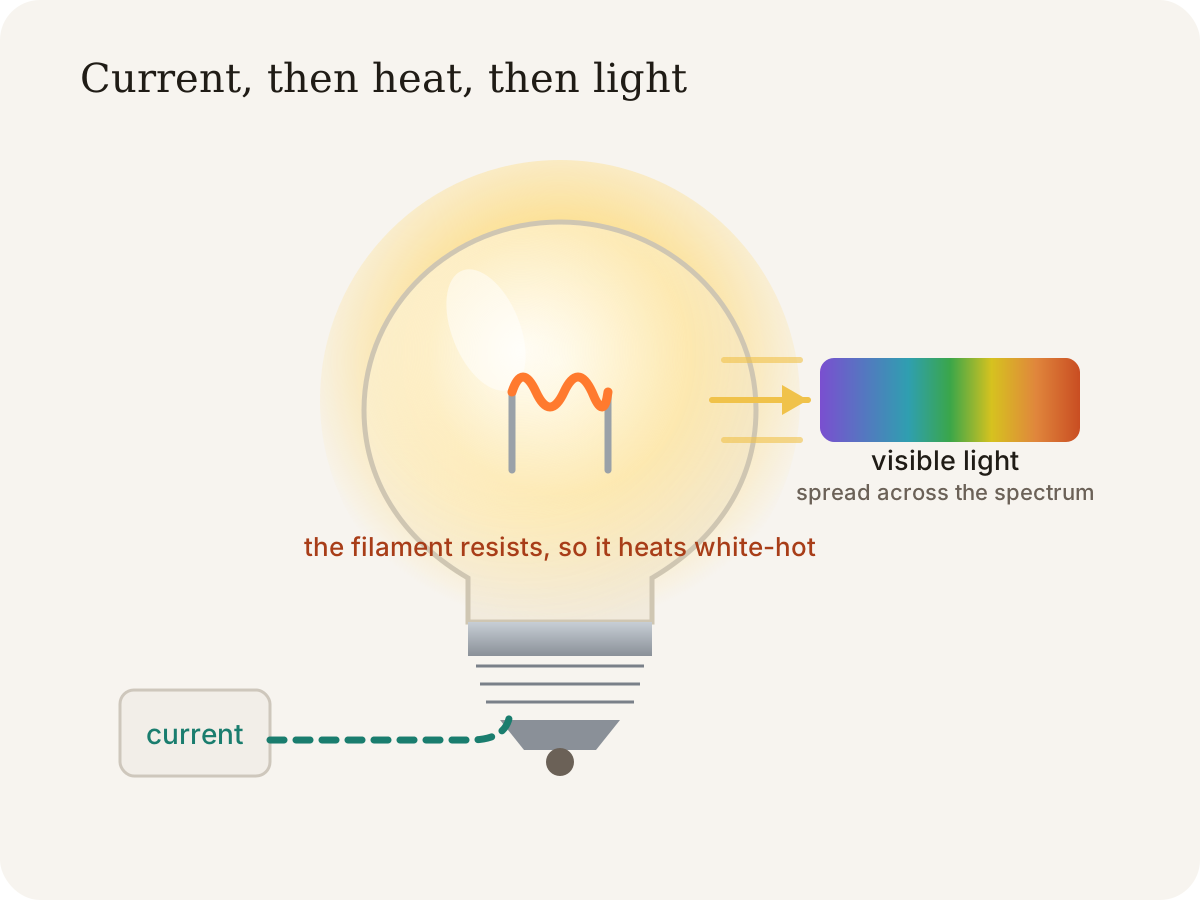
Electrical current is forced through a fine tungsten wire. The wire's high electrical resistance strongly opposes the flow of charge, causing energy to be deposited in the filament.
Explore object
A light bulb converts electrical energy to heat, and heat to visible radiation. In one small object it connects charge flow, resistance, thermal physics, and the spectrum of light.
What to notice
Step 1
Electrical current is forced through a fine tungsten wire. The wire's high electrical resistance strongly opposes the flow of charge, causing energy to be deposited in the filament.
Step 2
The filament reaches temperatures between 2500 and 2700°C — far above the melting point of most materials. Tungsten is used precisely because it has the highest melting point of all metals.
Step 3
At those temperatures, the filament radiates energy across a broad spectrum. Only about 5–10% falls in the visible range. The rest leaves as infrared radiation — heat you can feel without seeing.
The physics
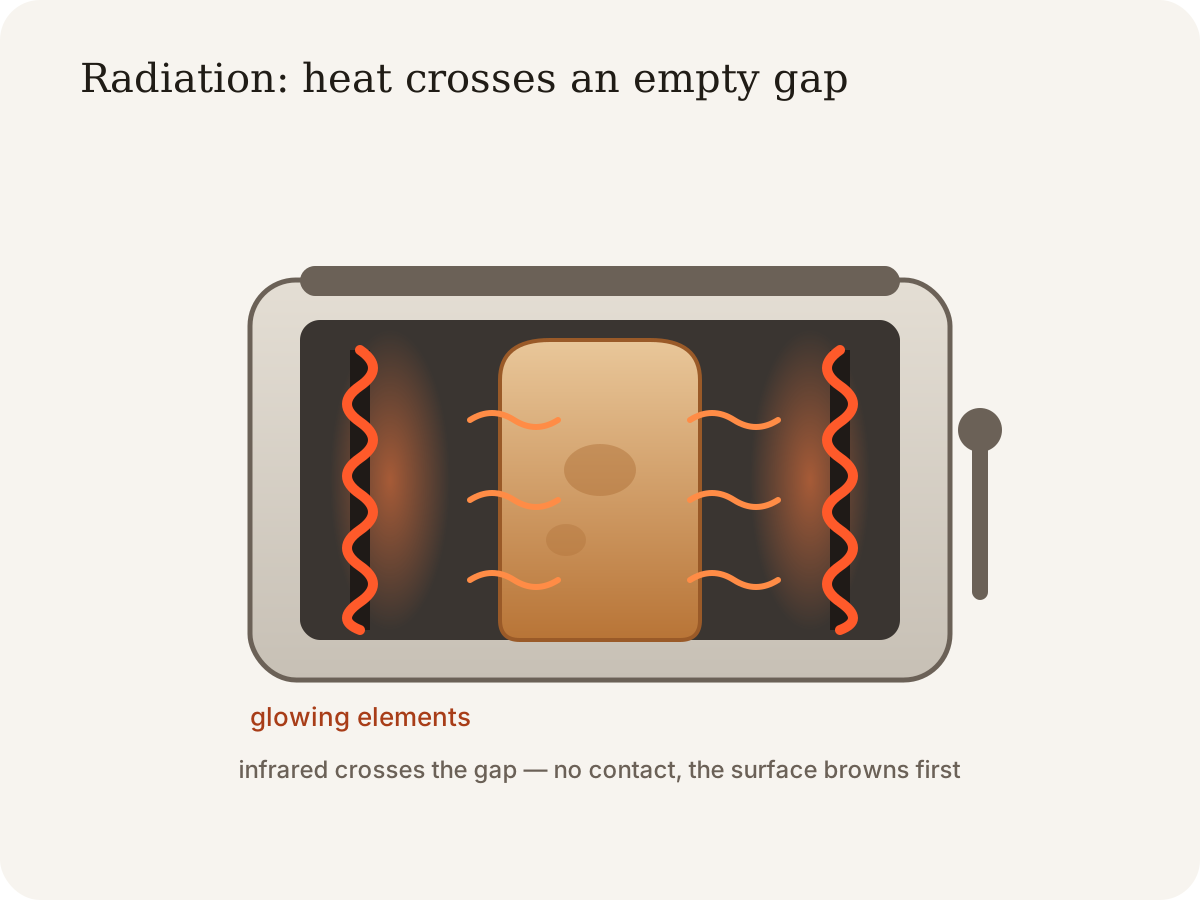
Any object above absolute zero emits electromagnetic radiation. The hotter the object, the more energy it emits and the shorter its peak wavelength. At filament temperatures, enough energy falls in the visible range to produce useful light — but most of the energy still leaves as infrared.
Radiant emission
LEDs bypass this entirely — they convert electrical energy to light through electron transitions in a semiconductor, emitting without needing to heat anything. The same visible output, a fraction of the energy.
See it move
Slide the filament temperature from a dull red glow to white hot. The bar on the right splits everything the filament radiates into the visible part (the bright band) and the invisible infrared — notice how little of the energy you can actually see.
Common misconception
Around 90–95% of the electrical energy entering an incandescent bulb becomes heat, not visible light. The glow is a byproduct of getting the filament hot enough to emit in the visible spectrum. It is thermal emission, not a direct conversion of electricity into light.
This makes the incandescent bulb a very honest physics object: it shows exactly where energy goes. For every unit of electricity consumed, roughly 0.9 units leave as infrared, about 0.05–0.1 as visible light, and a small residual as ultraviolet. Nothing is hidden.
Connect the physics
The full chain — current, resistance, thermal emission, visible wavelength — is the core of the Electricity and Light lesson. The bulb is its central object.
Tungsten is chosen for its extreme melting point, not because it conducts especially well. The material choice directly determines whether the filament survives operation.
The filament operates near its thermal limit. The glass envelope prevents oxidation that would destroy it — an engineering response to the extreme thermal conditions inside.
Quick check