The kitchen is not just thermal. It is acoustic and fluid-dynamic too. Timers, clattering
dishes, humming compressors, and flowing water all reveal how disturbances move through
matter.
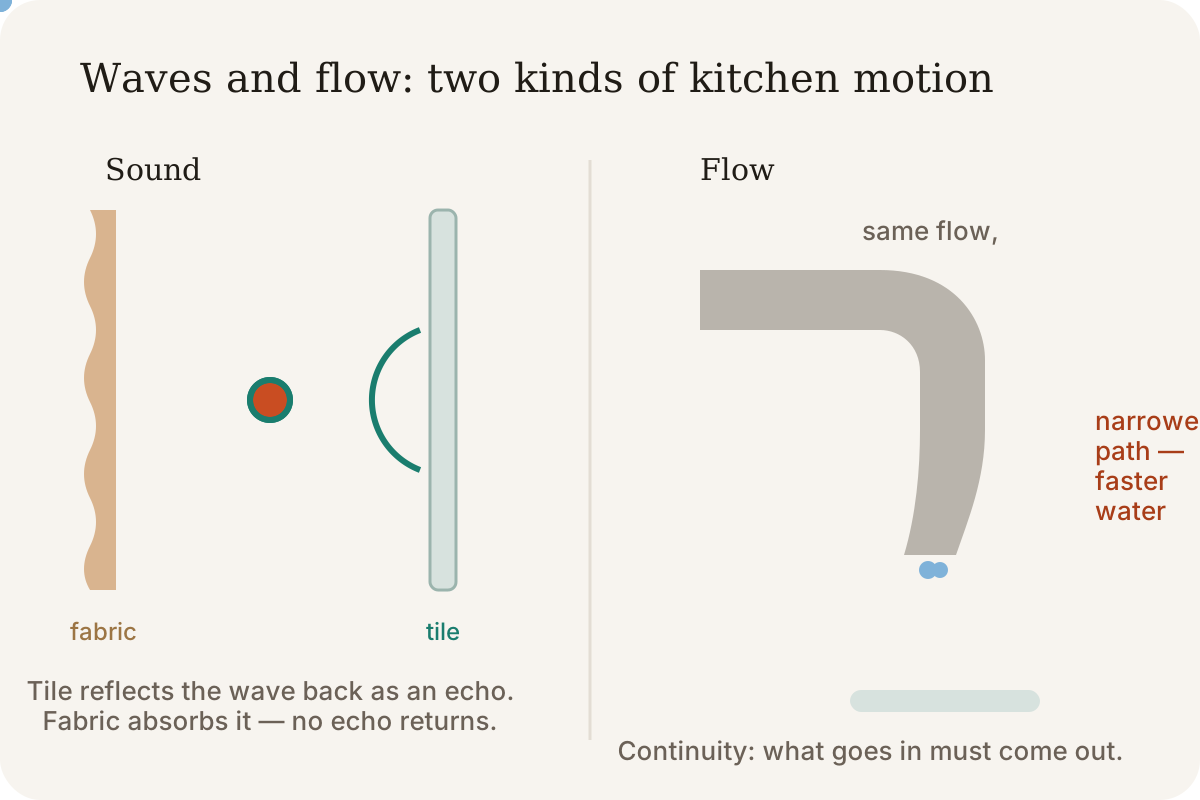
Watch wave reflection and constrained water flow in a single visual.
The left side emphasizes sound reflecting from hard boundaries. The right side shows how
visible flow changes as water moves through a controlled path and narrowing geometry.
The dial
Open the tap and watch order give way to turbulence.
One control tells the whole story. Open the valve and the stream speeds up — but the change
is not gradual everywhere. Watch the Reynolds number climb: below the shaded band the column
is smooth and glassy, and once it crosses into the band the same stream tumbles into chaotic,
splashing eddies. That tipping point is the laminar-to-turbulent transition.
The dial · audible
Fill a bottle and play the note the air pocket wants to sing.
Blow across a bottle and the trapped air springs back and forth at one natural frequency.
Add water and that air pocket shrinks, so it springs back faster and the pitch climbs. Press
play and drag the water level — you are hearing Helmholtz resonance, the same physics as a
subwoofer port and an ocarina.
Micro-simulation
Hear a frequency and watch its waveform at the same time.
Sound lab: hear a frequency
Play a pure tone, then change its frequency and loudness while watching the matching
waveform. The tone only plays while you hold it on, and the readout converts each
frequency into a physical wavelength in air.
Sound
Kitchen sound teaches wave behavior very quickly.
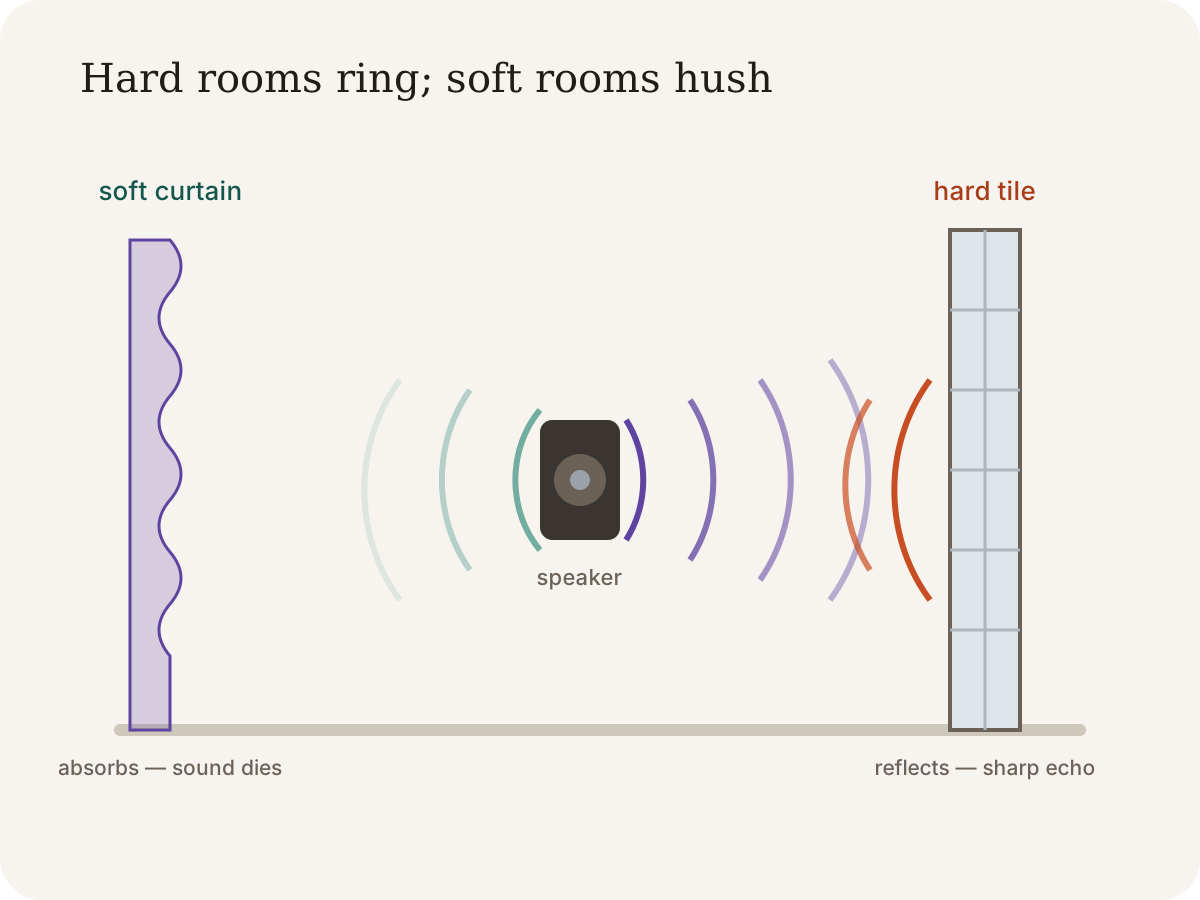
Sound is a pressure disturbance traveling through matter. Kitchens often feel loud and
sharp because hard surfaces reflect those disturbances rather than absorbing much of
their energy.
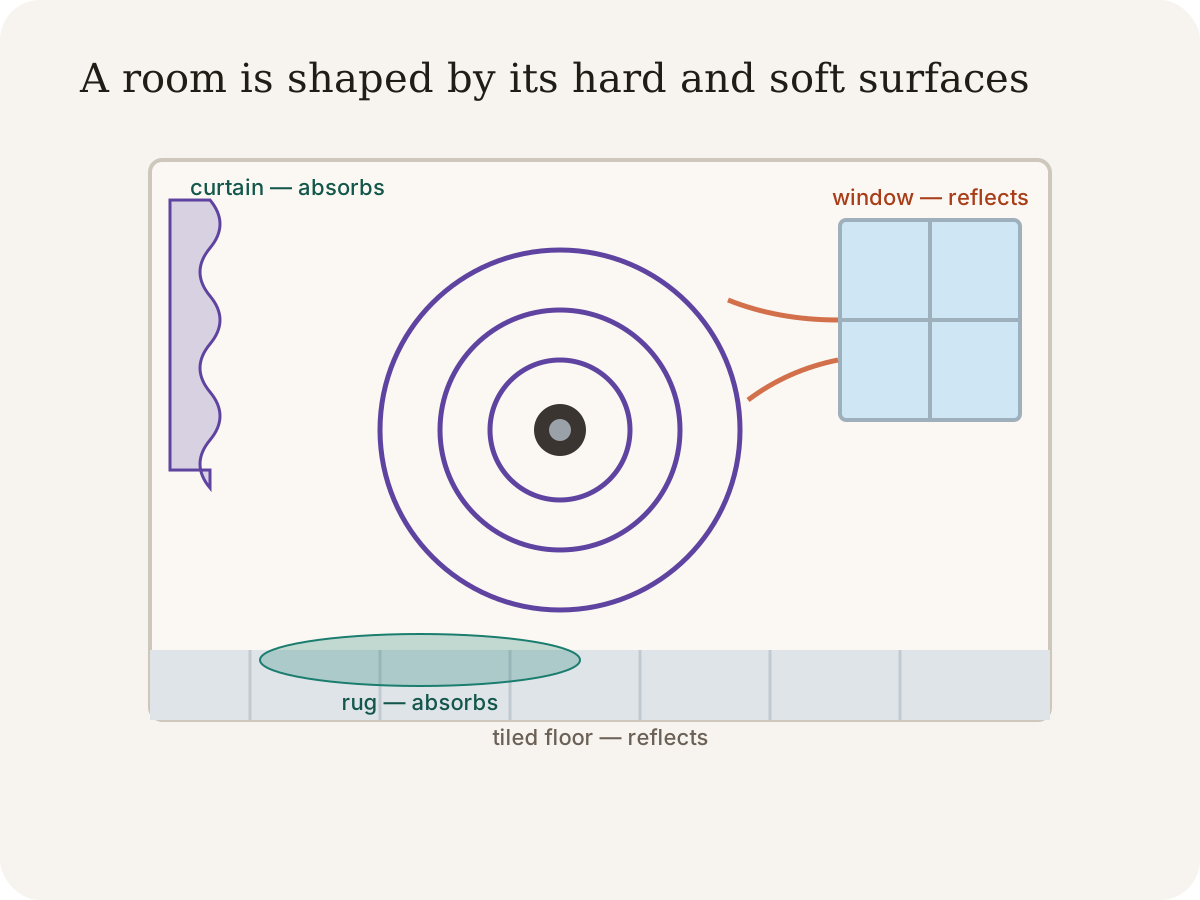
Acoustic room behavior
Use tile, glass, wood, fabric, and open doorways as intuitive entry points into reflection and damping.
Flow
A faucet is a compact lesson in pressure and resistance.
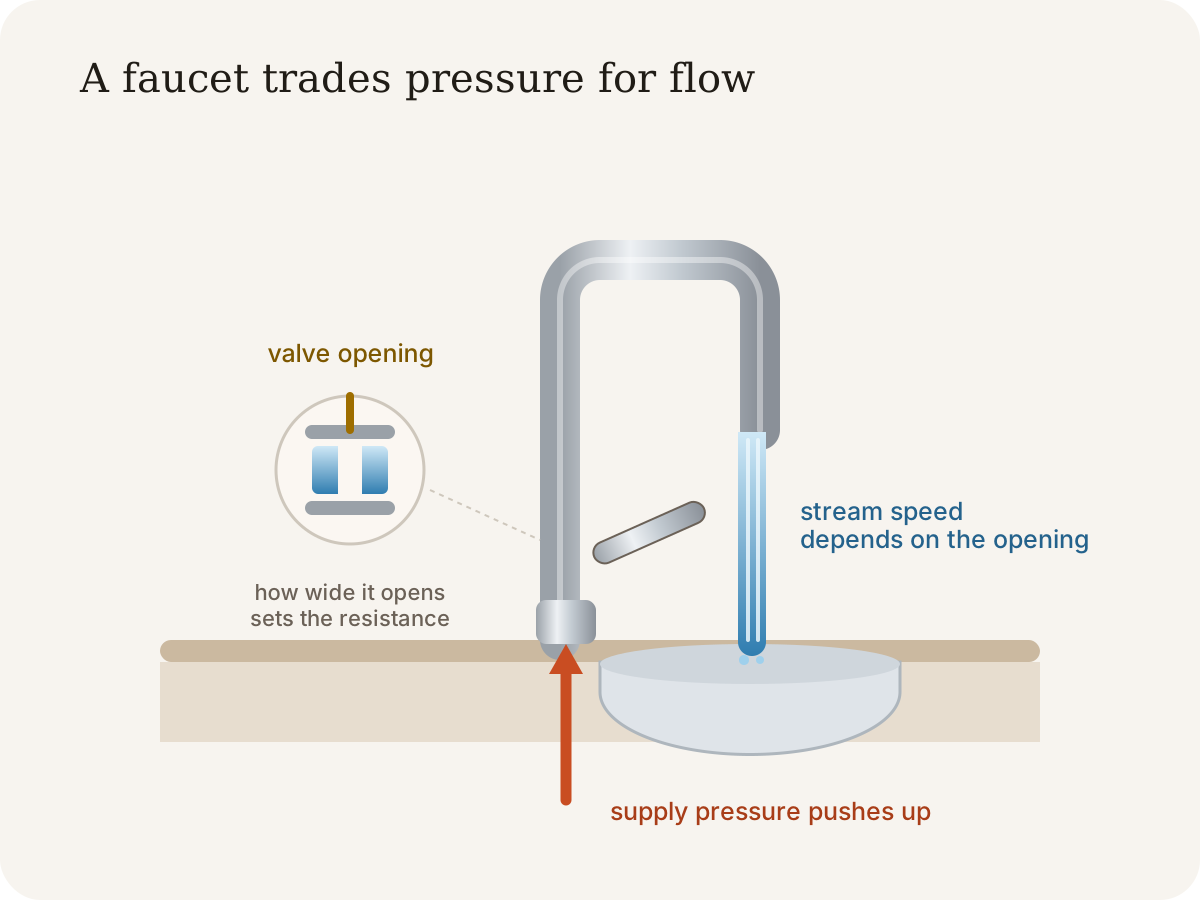
Faucet cross-section
Valves and channels control how pressure differences become visible water flow.
Flow rate depends on pressure difference, path geometry, and resistance in the system.
Even a small change at the control point can strongly reshape the visible jet.
This is a useful bridge from household observation to more formal ideas in fluid
mechanics.
Questions
Good questions for discussion or assessment.
Why does a clap sound different near curtains?
Because some materials absorb more acoustic energy than hard surfaces do.
Why can a faucet opening change the jet so quickly?
Because geometry strongly affects how the pressure difference is converted into flow.
Why are kitchens often noisier than bedrooms?
Because kitchens often contain more reflective surfaces and less sound-absorbing material.