Step 1
Refrigerant evaporates inside
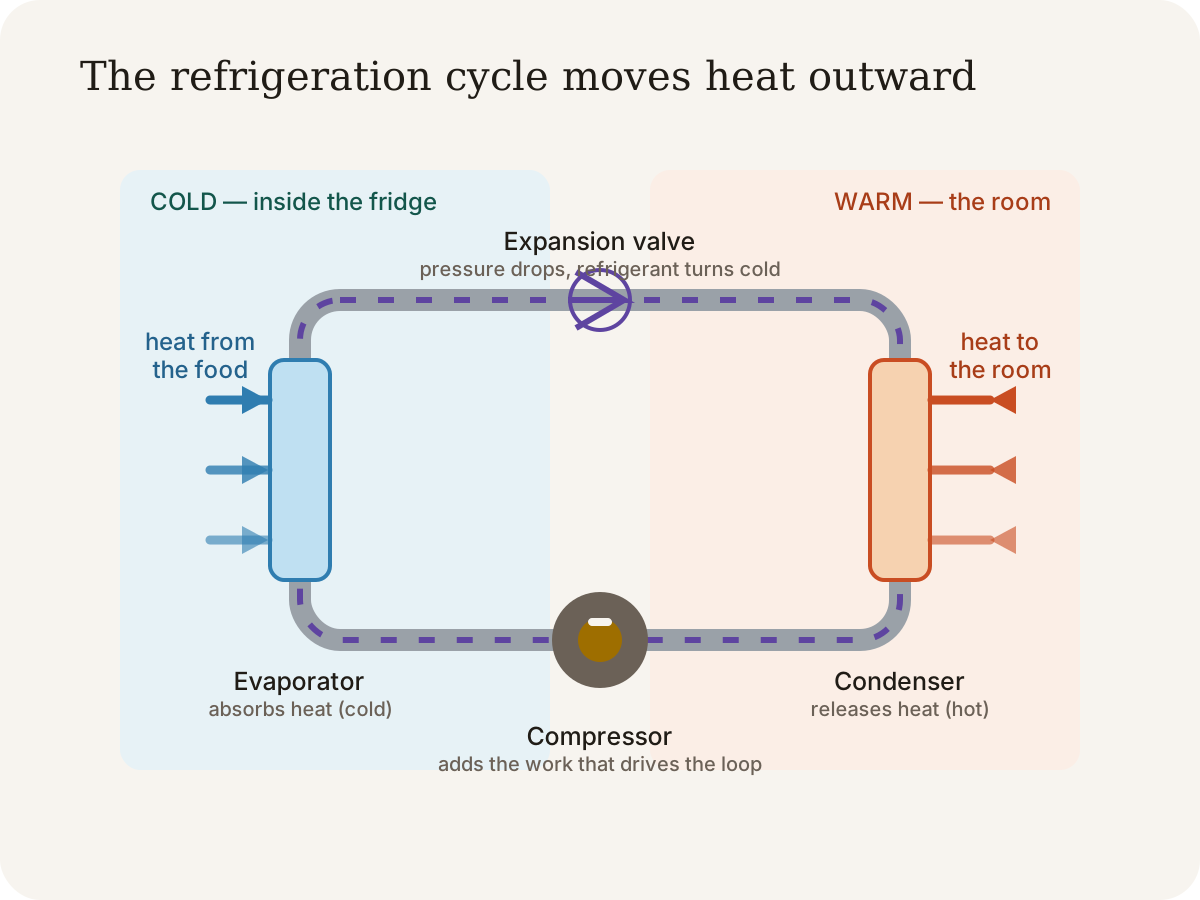
Liquid refrigerant absorbs heat from the cabinet air and food, evaporating in the process. Thermal energy leaves the interior and enters the refrigerant.
Explore object
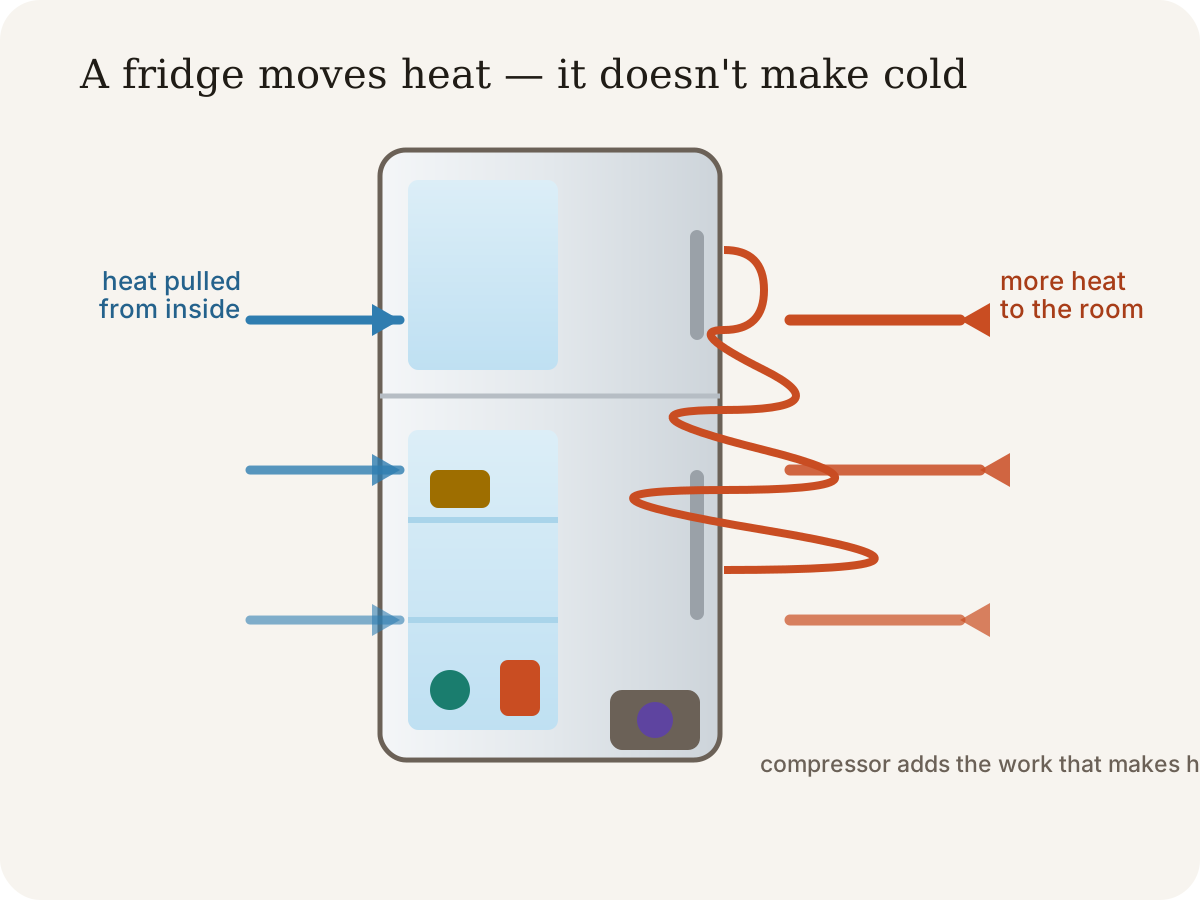
A refrigerator removes heat from a cold space and deposits it into the room. It makes heat flow against its natural direction — and that requires work.
What to notice
Step 1
Liquid refrigerant absorbs heat from the cabinet air and food, evaporating in the process. Thermal energy leaves the interior and enters the refrigerant.
Step 2
An electric compressor pressurises the refrigerant gas, raising both its pressure and temperature. This is where electrical energy enters the cycle.
Step 3
At high pressure, the hot refrigerant condenses and releases heat through the coils at the back of the cabinet — which is why the back of a fridge feels warm.
Step 4
An expansion valve reduces the refrigerant pressure before it re-enters the cold side, cooling it down so it can absorb heat from the interior again.
The physics
Heat naturally flows from hot regions to cold ones. Moving it the other way — from a cold interior to a warmer room — requires work input. That work comes from the compressor, driven by electricity. The refrigerant acts as the working fluid, cycling repeatedly between liquid and gas states to carry heat from inside to outside.
Refrigeration cycle
Each evaporation event absorbs energy from the cabinet; each condensation event releases it to the room. The compressor maintains the pressure difference that keeps the cycle running.
See it move
Follow the refrigerant parcels around the loop: cold (blue) as they absorb heat inside the compartment, hot (orange) as the compressor squeezes them and they dump that heat at the back coils. Turn up the compressor and watch more heat dots make the trip.
Common misconception
"Cold" is not a substance that enters the cabinet. The fridge works by removing thermal energy from the air and food inside and depositing it in the room. Leaving the door open on a warm day does not cool the kitchen — over time it warms it, because the compressor adds more heat to the room than it removes from the cabinet.
The same principle governs heat pumps used in home heating. In both cases, a compressor does work on a working fluid to move thermal energy from one reservoir to another, regardless of the natural direction of the temperature gradient.
Connect the physics
Evaporation and condensation are phase-change events. The refrigerant exploits the large latent heat of these transitions to move significant energy each cycle.
The cabinet walls use insulating materials to slow heat re-entry from the room. The compressor and coils use thermally conductive metals to transfer heat efficiently.
The thermos and the refrigerator both manage heat flow between a controlled interior and the room — one passively through structural absence, one actively through mechanical work.
Quick check