Kitchen Lab

A counter-top where the physics is actually solved.

Everything else on this site illustrates physics. This page computes it: a live thermal-camera view of a virtual counter, running the heat equation on thousands of cells in real time. Place a hot plate, a pan of water, spoons, and ice — then watch conduction, latent heat, and boiling emerge on their own.

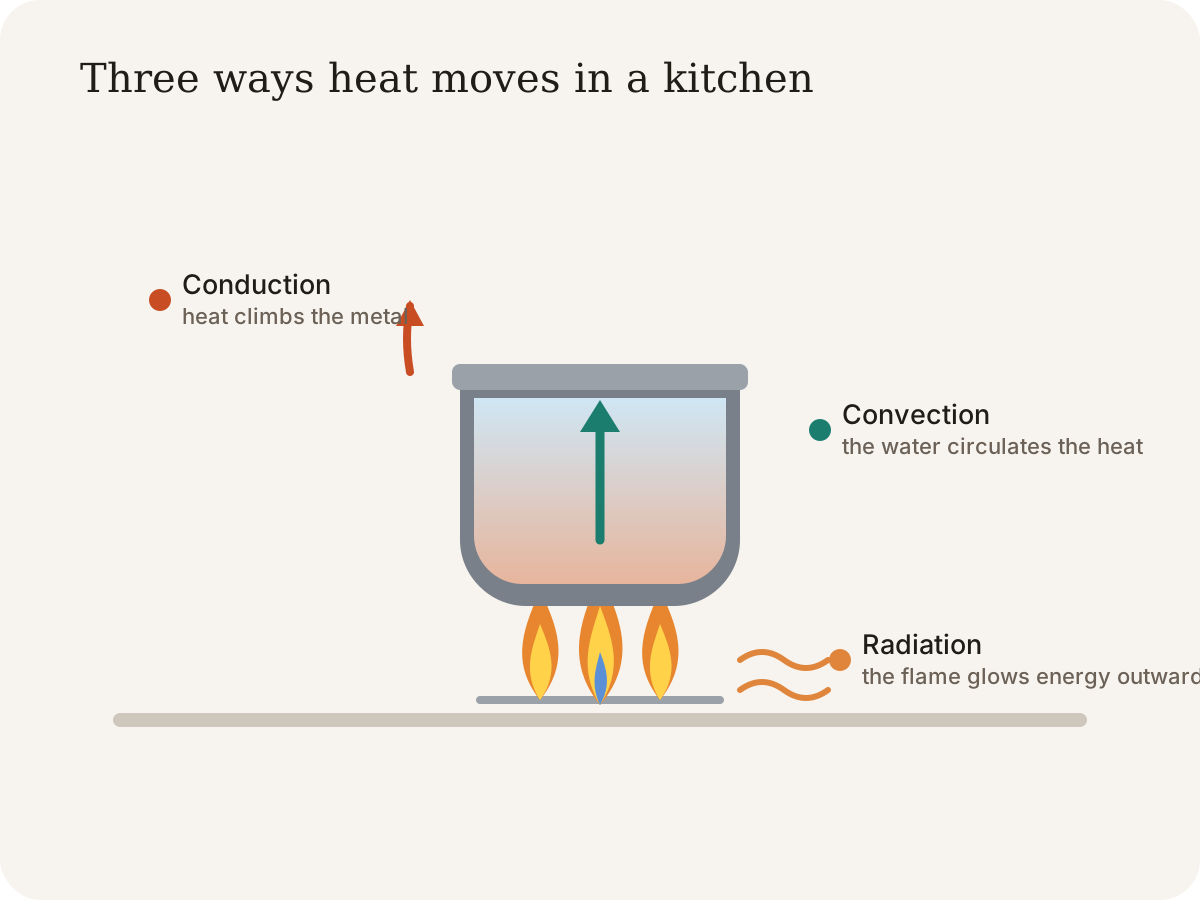
Kitchen heat laboratory illustration

The sandbox

Pick a tool, click the counter, and watch heat do the rest.

Pick a tool above, then click anywhere on the counter to place it.

Probe

Drop the probe tool anywhere to graph its temperature.

Challenges

    Badges you earn are saved in your lab notebook.

    Set your own challenge (for teachers)

    Set a challenge, build the starting scene, then press "🔗 Copy link" — the link recreates both for your class.

    What you are seeing

    Not an animation — a numerical solution.

    The colours

    The view is a thermal camera: deep blue is room temperature, and the scale climbs through violet, red, and orange to white-hot. Materials keep a faint tint of their own so you can see what you placed. Watch the boundary of a hot pan: the halo creeping into the air and along the counter is conduction, computed cell by cell.

    Real thermal personalities

    Each material carries its real character: copper races heat along its length while wood barely passes it; stone soaks up energy slowly and releases it slowly; water refuses to pass 0 °C until all the ice is melted, and refuses to pass 100 °C — pouring the extra energy into becoming steam instead. Those plateaus are latent heat, and no one scripted them: they fall out of the arithmetic.

    Things to try

    Five experiments that surprise people.

    Drop ice into boiling water

    The water temperature crashes, then stalls — the probe shows a plateau while the ice pays its melting debt before the climb resumes.

    Race the spoons

    Stand a copper and a wooden spoon in the same hot pan. Watch the heat front sprint up one and crawl up the other — then check the Spoon race badge.

    Listen to the kettle

    Turn the sound on and heat a pan of water: nucleation crackle from about 60 °C, a rising hiss near 90, and a rolling rumble at the boil — synthesised live from the water's real state.

    Shield with stone

    Put a stone slab between the hot plate and the pan. Everything slows — thermal mass buys time in both directions, the same trick a pizza stone plays.

    Boil it dry

    Leave a pan boiling and watch cells of water leave as steam until nothing is left — then see how fast the empty pan overheats. This is why dry pans burn.

    Send someone your setup

    Build an experiment and press "Copy link" — the link recreates your exact arrangement, hot-plate setting and all, on any device. Handy for setting classroom challenges.